
Forestry Mulching & Land Clearing in Western Massachusetts
Low-impact forestry mulching and land clearing for property owners, farms, and contractors throughout Western Massachusetts. From reclaiming overgrown acreage in the Hilltowns to restoring pasture and field access in Hatfield, Whately, and across the Pioneer Valley, we clear land selectively, cleanly, and with long-term usability in mind.
What Forestry Mulching Is
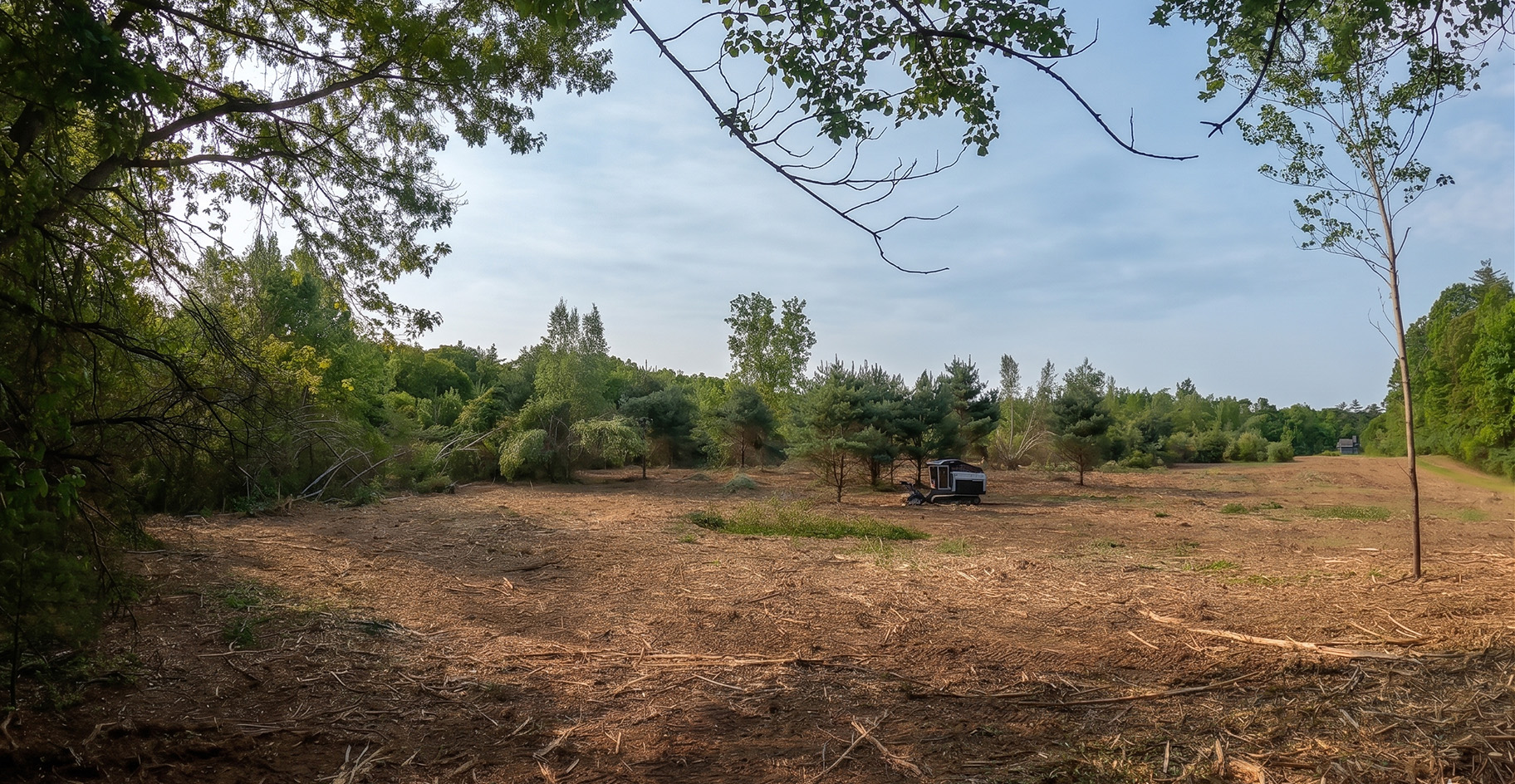
Forestry mulching is one of the most efficient, low-impact ways to reclaim overgrown land in a single pass. Using specialized equipment, we process brush, saplings, and invasive growth directly into a nutrient-rich mulch layer without tearing up the surrounding ground.
Forestry mulching is often a strong fit for properties where the goal is to reclaim overgrown ground without clearing everything. Brush, saplings, invasive growth, and dense understory can be selectively removed while mature trees and established site features remain.
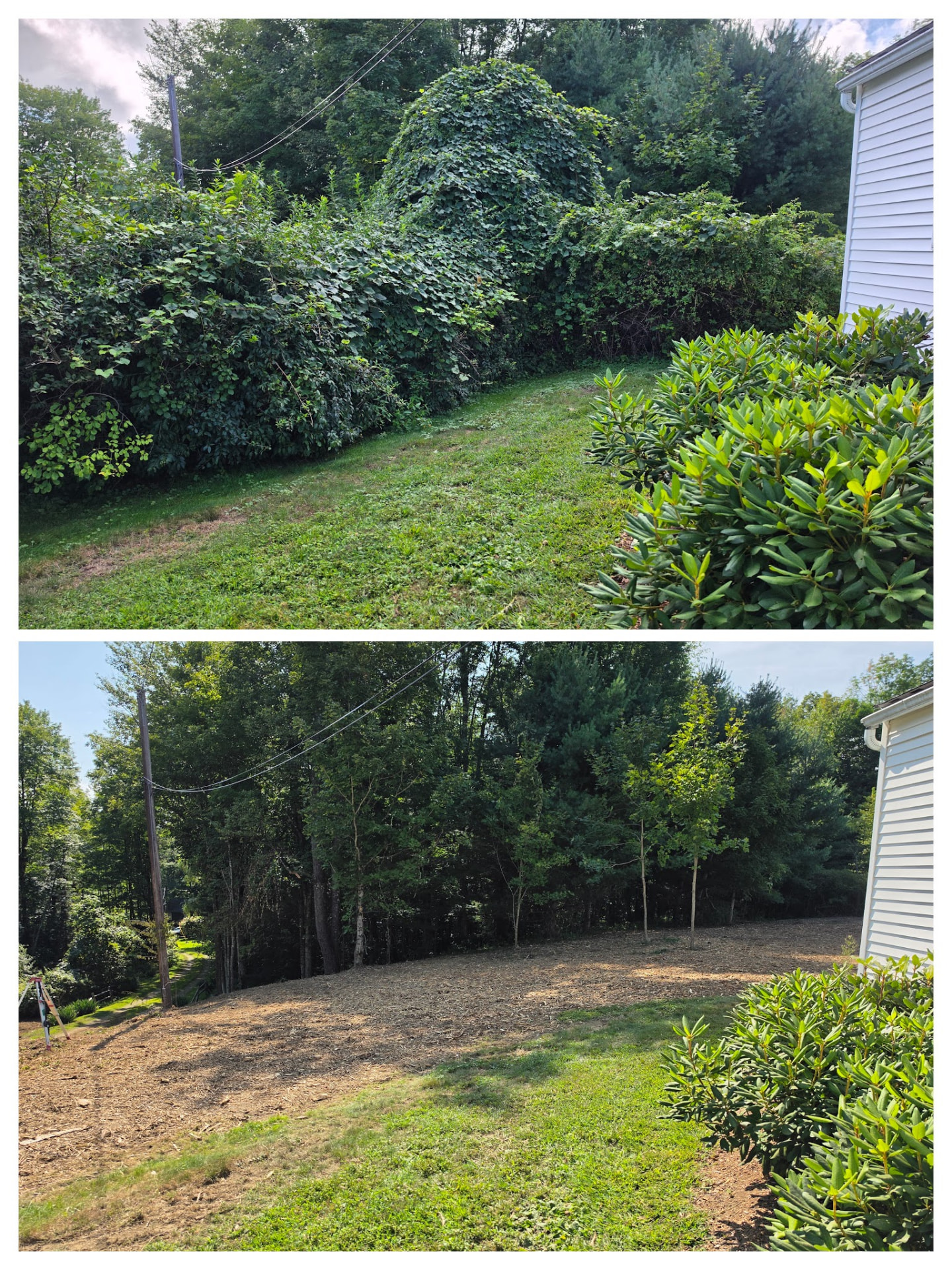
Traditional clearing methods can be invasive and disruptive to the soil, especially on the rocky, uneven terrain common throughout Western Massachusetts. Our approach is selective and intentional. We remove invasive brush, saplings, overgrown field edges, and neglected pasture growth while preserving the hardwoods, canopy, stone walls, and natural features that give your property its character.
Whether the goal is reclaiming overgrown acreage in the Hilltowns, restoring pasture and field access in Hatfield or Whately, or opening usable land around homes and farms throughout the Pioneer Valley, we clear exactly what needs to go without unnecessarily disturbing the surrounding landscape.
Instead of leaving behind burn piles, ruts, and stripped ground, we leave behind a cleaner, more usable property with a finished appearance that feels natural and maintained. The result is improved access, restored field edges, and land that is ready for whatever comes next.
Real Projects, Real Results
Residential Property Reclamation — Huntington, MA
Selective forestry mulching reopened pond views and reclaimed overgrown transitions around the home while preserving mature trees and established landscape features.
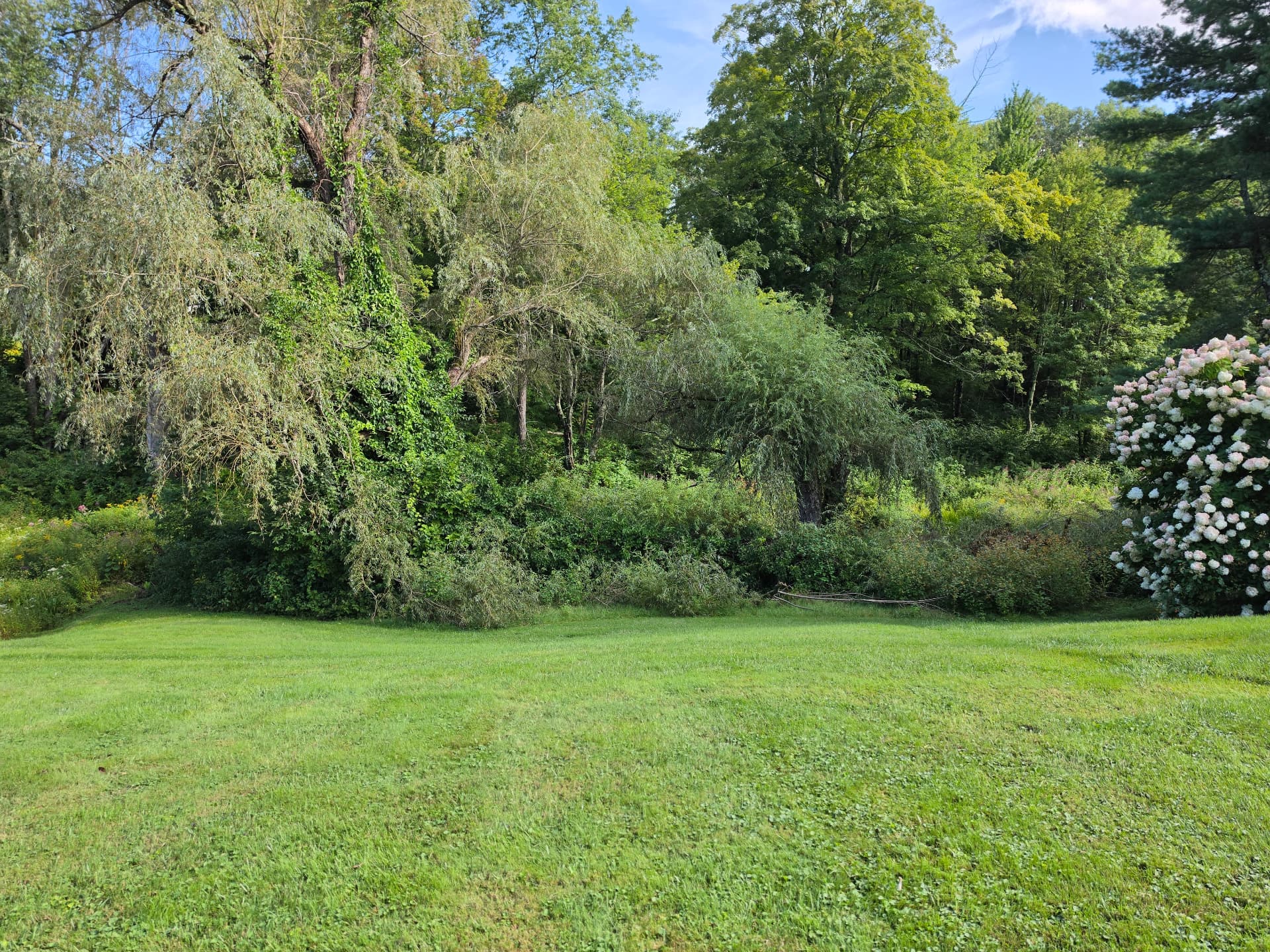 Before
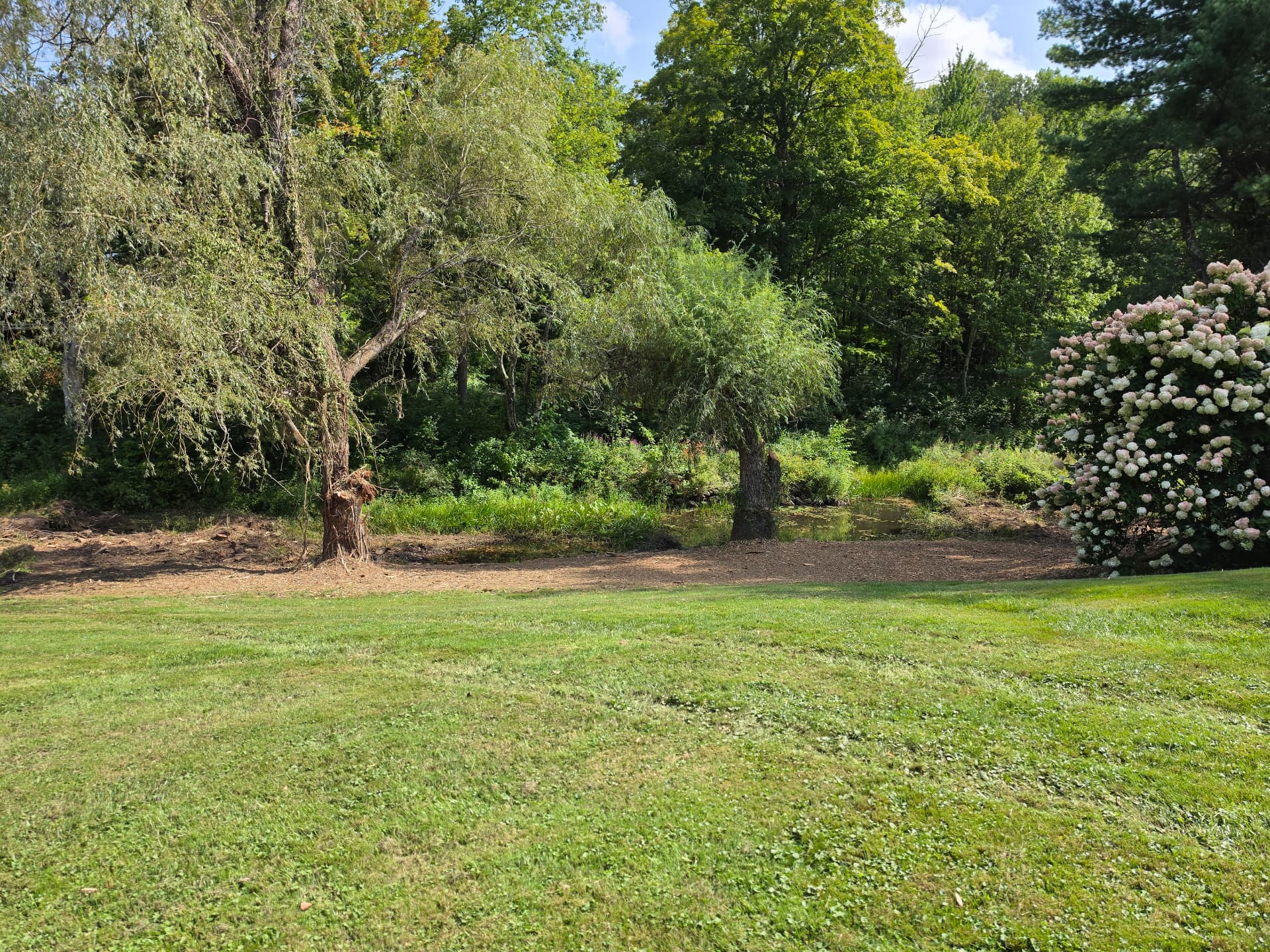 After
AfterField Edge Reclamation, Southampton
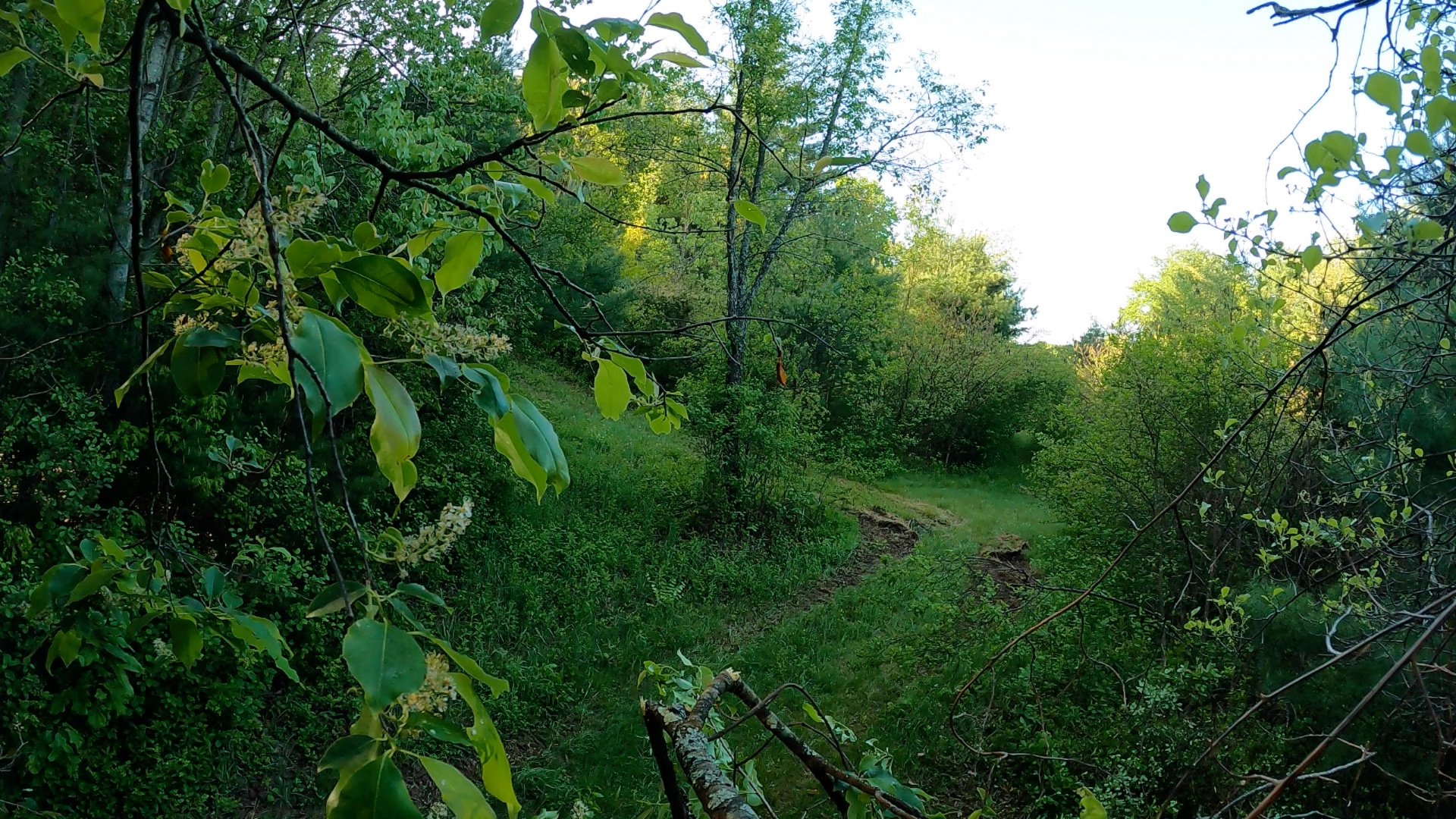 Before
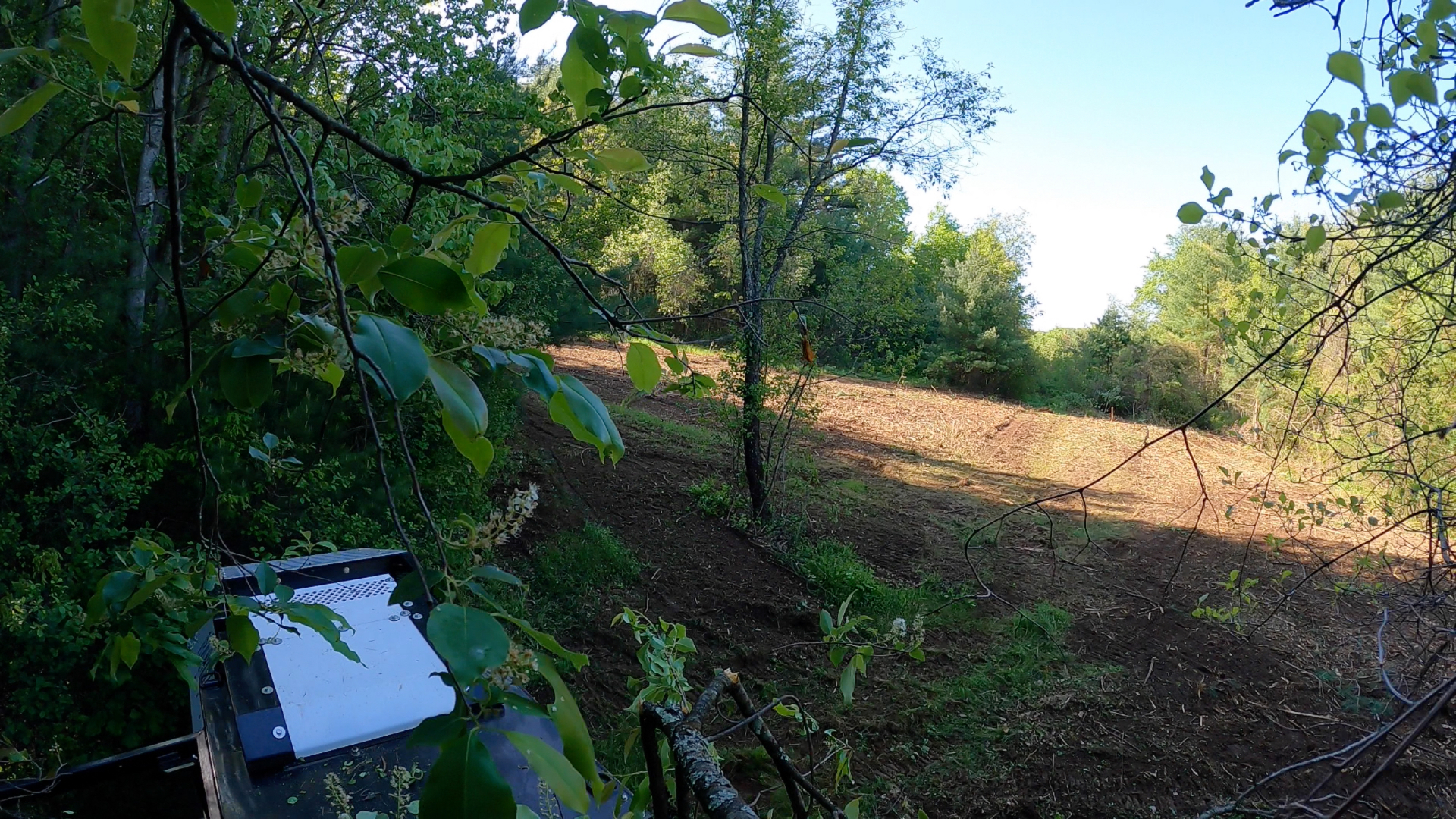 After
AfterPasture Restoration, Southampton WMA
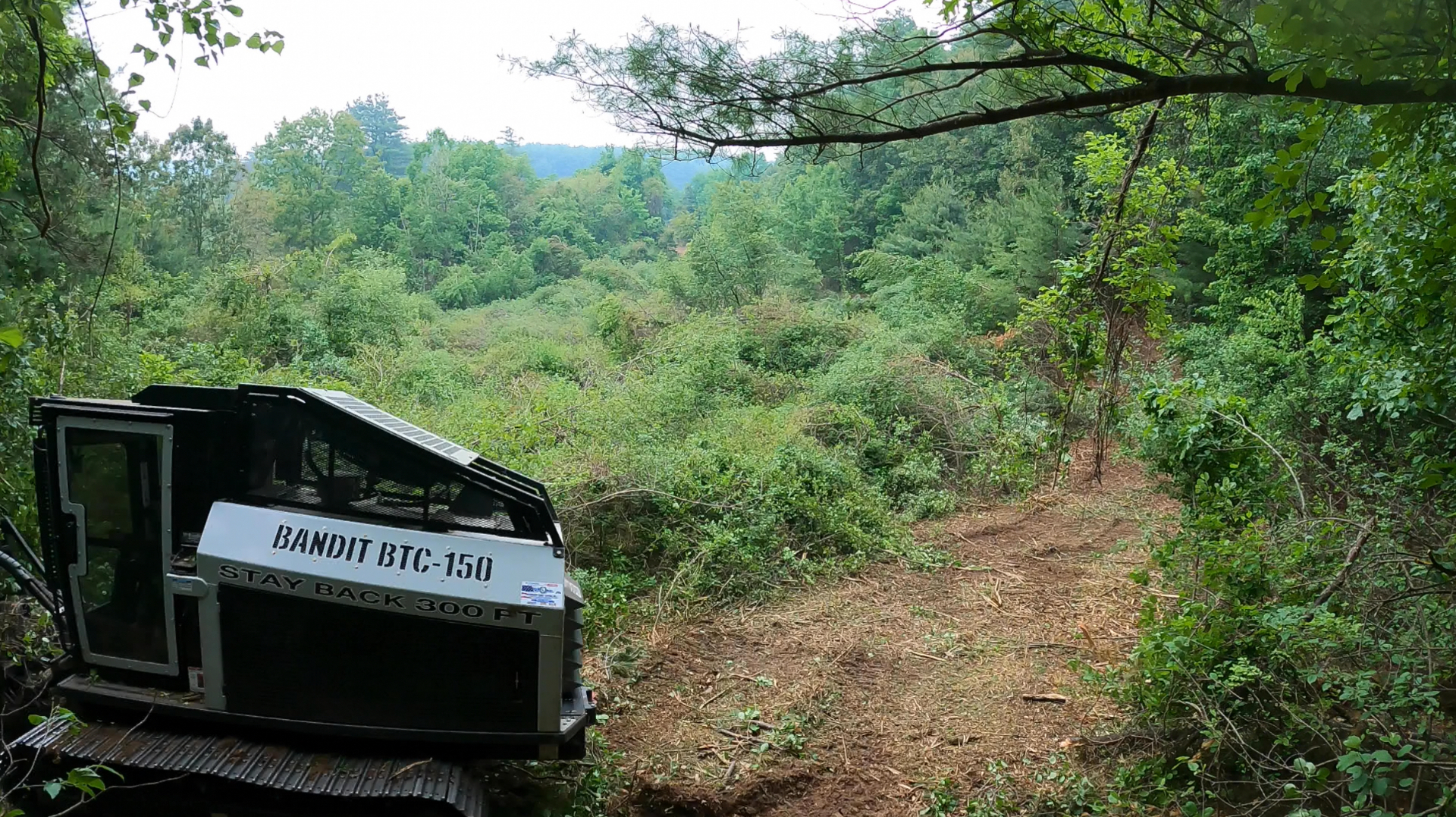 Before
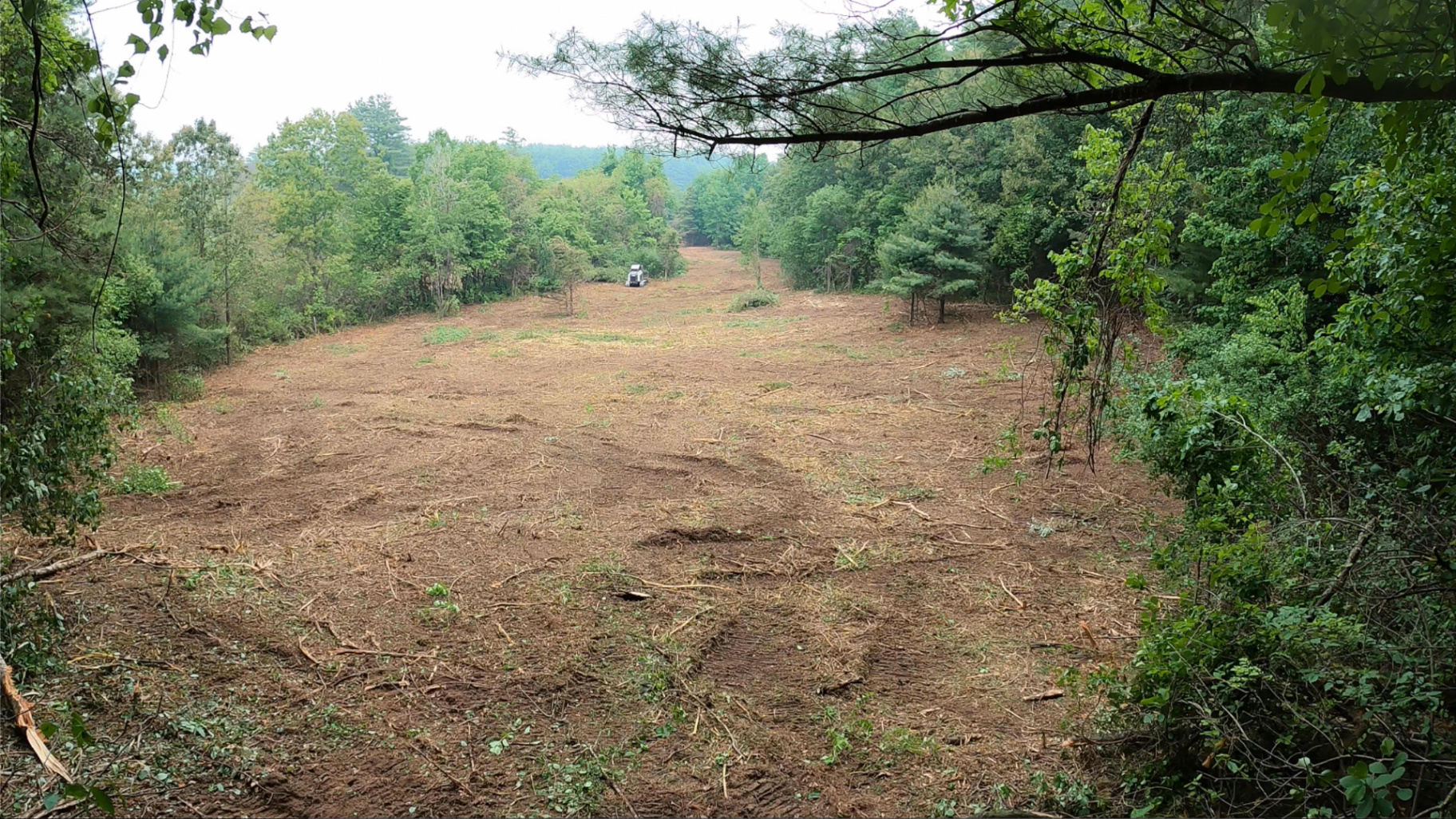 After
AfterWhere Forestry Mulching Fits
A single, low-impact method applied across the work property owners and contractors actually need done in Western Massachusetts.
Across Western Massachusetts, invasive growth like multiflora rose, bittersweet, invasive honeysuckle, knotweed, and aggressive saplings can quickly overtake fields, trails, fence lines, and wooded acreage. Forestry mulching provides a fast, low-impact way to reclaim access, restore visibility, and regain control of overgrown land.
Trail & Access Clearing
ATV loops, hunting trails, access roads, and maintenance routes to remote acreage, cut cleanly without tearing up the surrounding woods.
Field Edge Reclamation
Pull creeping edges back, restore mowable perimeters, and turn brush-choked acreage back into productive, usable property.
Site Preparation
Open building envelopes, improve drainage, and set clean access for utilities, driveways, and the construction work that follows.
Pasture Restoration
Reclaim overgrown pasture, expand grazing area, and re-establish working fence lines and clear sight lines across the property.
Property Reclamation
Reclaim overgrown areas around homes, ponds, stone walls, wooded edges, and access routes while preserving mature trees and established landscape features.
Benefits of Low-Impact Land Clearing
Minimal Ground Disturbance
Tracked equipment leaves a soft footprint, with no torn-up topsoil or compacted ruts.
Processed On Site
Suitable vegetation is mulched in place, reducing the need for brush piles and off-site handling.
Natural Mulch Layer
Processed vegetation remains on site as a protective organic layer over the treated ground.
Efficient Site Reclamation
Mulching combines vegetation removal and processing into one operation, reducing the number of separate clearing steps.
Selective Preservation
Retain mature trees, stone walls, and established site features while selectively removing the growth that no longer belongs.
Reduced Follow-On Cleanup
Less piling and material handling can create a cleaner transition into grading, access improvements, restoration, or future site work.
Forestry Mulching Across Western Massachusetts
Based in Huntington, MA, we serve property owners, farms, and contractors throughout the Pioneer Valley, the Hilltowns, and across Hampshire, Hampden, and Franklin counties in Western Massachusetts.
Recent Project: Huntington Property Reclamation
Selective forestry mulching reopened views around a residential property, pond edges, and wooded transitions while preserving mature trees and established landscape features.
View the Huntington Property Reclamation Case StudyRelated reading: Land Clearing vs. Forestry Mulching: What's the Difference?
Walk Your Property With Us
Every project starts the same way: boots on the ground, a clear plan, and clean execution. Tell us what you're working with and we'll come walk it with you.