
Land Clearing vs. Forestry Mulching: What's the Difference?
If you have an overgrown property and are trying to decide how to reclaim it, you have probably come across two terms: land clearing and forestry mulching.
They are sometimes used interchangeably, but they are not the same process. Choosing the wrong approach can mean paying for more disturbance than your property actually needs, or ending up with a finished result that does not match what you had in mind.
The right choice comes down to what you want the land to become when the work is finished.
Land Clearing: Starting From Scratch
Land clearing is the traditional approach when vegetation, trees, stumps, and root systems need to be removed so the ground can be prepared for a different use. Excavators, bulldozers, grapples, saws, and other equipment may be used depending on the size of the material and what needs to happen afterward.
Stumps and roots can be removed, debris can be hauled away, chipped, burned where permitted, or processed on-site, and the area can then be graded as necessary.
The result can be open, construction-ready ground. That makes conventional land clearing the right approach for building pads, driveway construction, septic systems, utility installations, and other projects where the existing vegetation and root systems would interfere with what comes next.
The tradeoff is that traditional clearing is generally more disruptive when stumps, roots, grading, and debris removal are required. It can involve hauling material away, processing it on-site, or managing debris through other approved methods. Cost per acre can also run higher than forestry mulching, though that's not universal, dense timber, difficult terrain, machine choice, and production rates can all shift the economics in either direction.
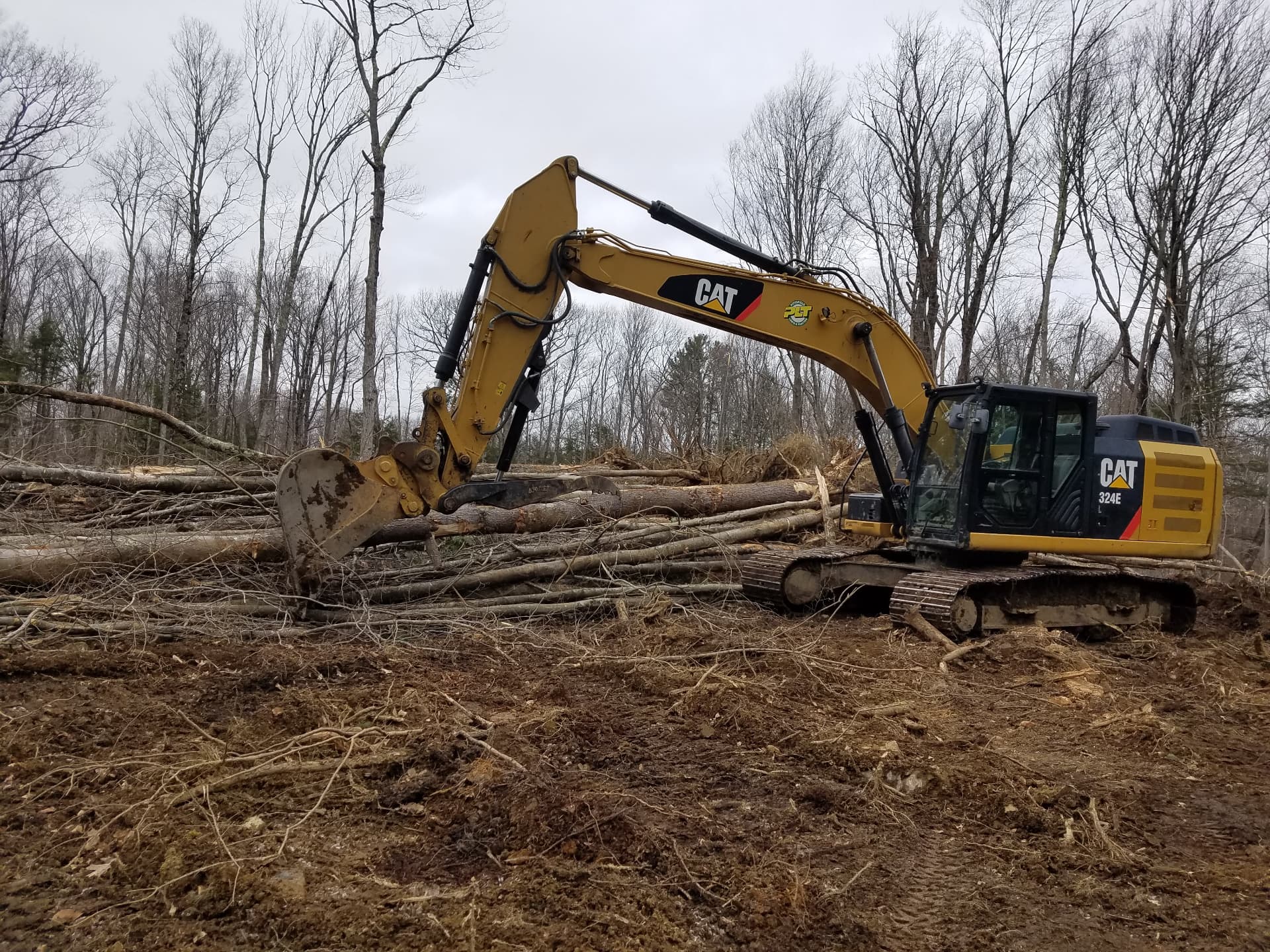
Forestry Mulching: Selective and In Place
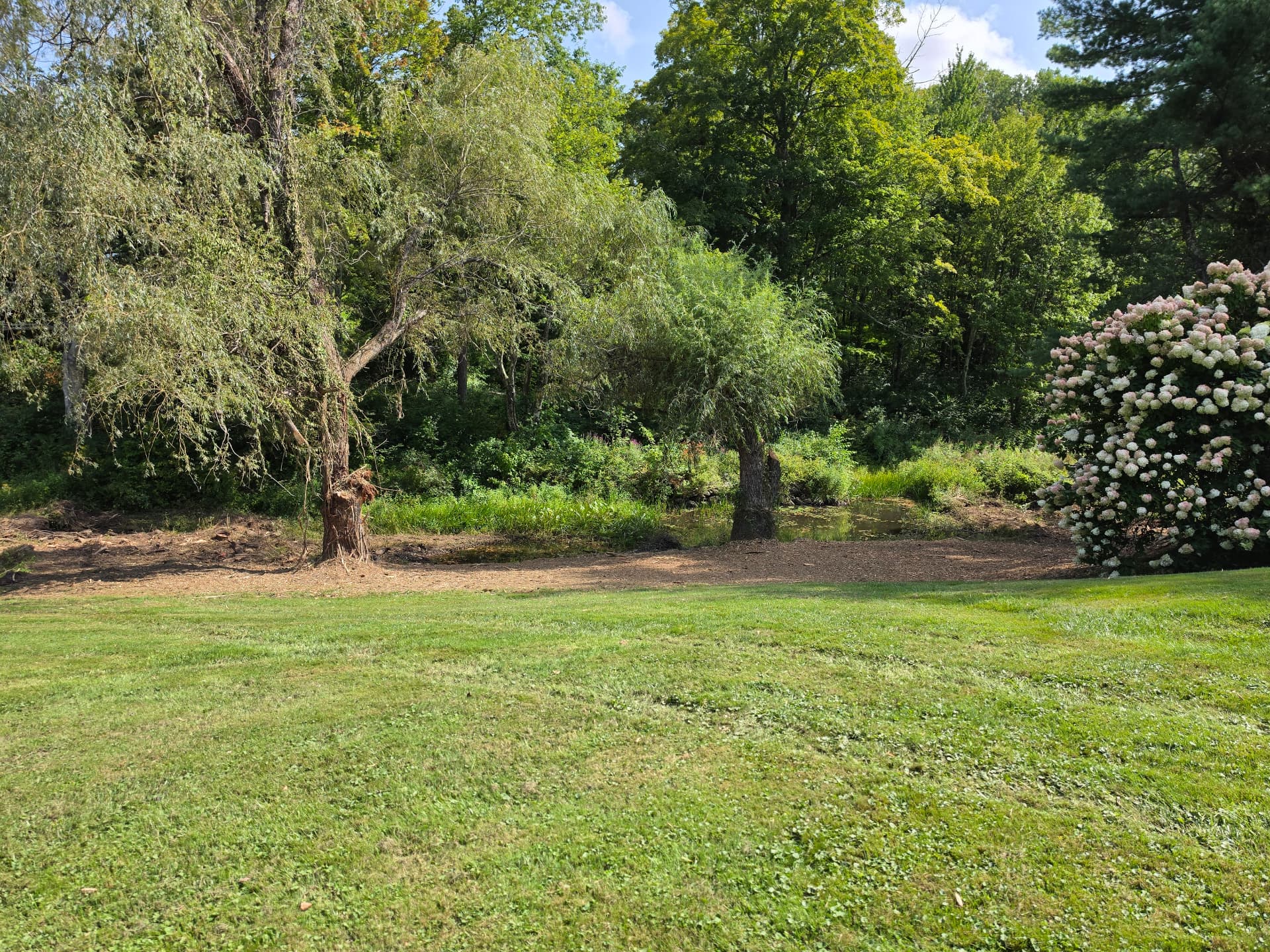
Forestry mulching uses a specialized rotating mulching head mounted on a skid steer, compact track loader, dedicated mulcher, or excavator to process brush, saplings, vines, and trees into mulch where they stand. Instead of loading and hauling most of that vegetation away, the processed material remains on-site as a mulch layer.
Because the equipment can work with precision, forestry mulching is especially well suited to selective clearing. A skilled operator can remove dense unwanted growth while working around mature trees, boulders, stone walls, trails, and other property features the owner wants to preserve. Compared with conventional grubbing and clearing, soil disturbance is typically much lower because the root systems of the vegetation being mulched are generally left in the ground.
This is the right approach when the goal isn't a blank slate, it's reclaiming land that's grown in over time while keeping the character of the property intact. Overgrown fields, pond edges that have disappeared behind brush, trail corridors, and residential properties where mature trees and landscaping matter are all strong fits for forestry mulching.
The Real Difference, in Plain Terms
Bare, buildable ground
Reclaimed, usable land that still looks natural
Trees, brush, stumps, and root systems, as needed for the site
Selected brush, saplings, and unwanted growth
Varies by project scope
Mature trees, boulders, and features you choose to keep
Hauled away, processed on-site, burned where permitted, or otherwise managed
Ground and left on-site as mulch
Can be significant, especially where stumps and roots are removed
Typically much lower
New construction, building pads, septic systems
Overgrown fields, pond edges, trails, residential reclamation
Which One Do You Actually Need?
Ask yourself one question: are you building something on this exact ground, or are you trying to get the land back?
Building something there? Think land clearing.
Trying to get the land back? Think forestry mulching.
Some properties need both.
If you're preparing for construction, a building pad, a driveway, a septic field, you need land clearing. Construction-ready areas typically require stump and root removal along with grading, though the exact extent depends on the specific plans.
If you're dealing with a field, a tree line, a pond edge, or a section of property that's grown in over the years and you want it open and usable again without losing the mature trees and character that make it worth having, forestry mulching is often the better fit. It's typically less disruptive, and depending on site conditions, often more cost-effective, with a result that still looks like your property, just without the overgrowth.
We recently worked through this exact decision on a 54-acre residential property in Huntington, Massachusetts. The owners did not want the property stripped bare. They wanted to reopen areas around the home, driveway, wooded sections, and ponds while preserving the mature trees and established character of the property.
Selective forestry mulching accomplished that without turning the project into conventional land clearing. The finished property remained wooded and natural, but with dramatically improved access, visibility, and usable space.
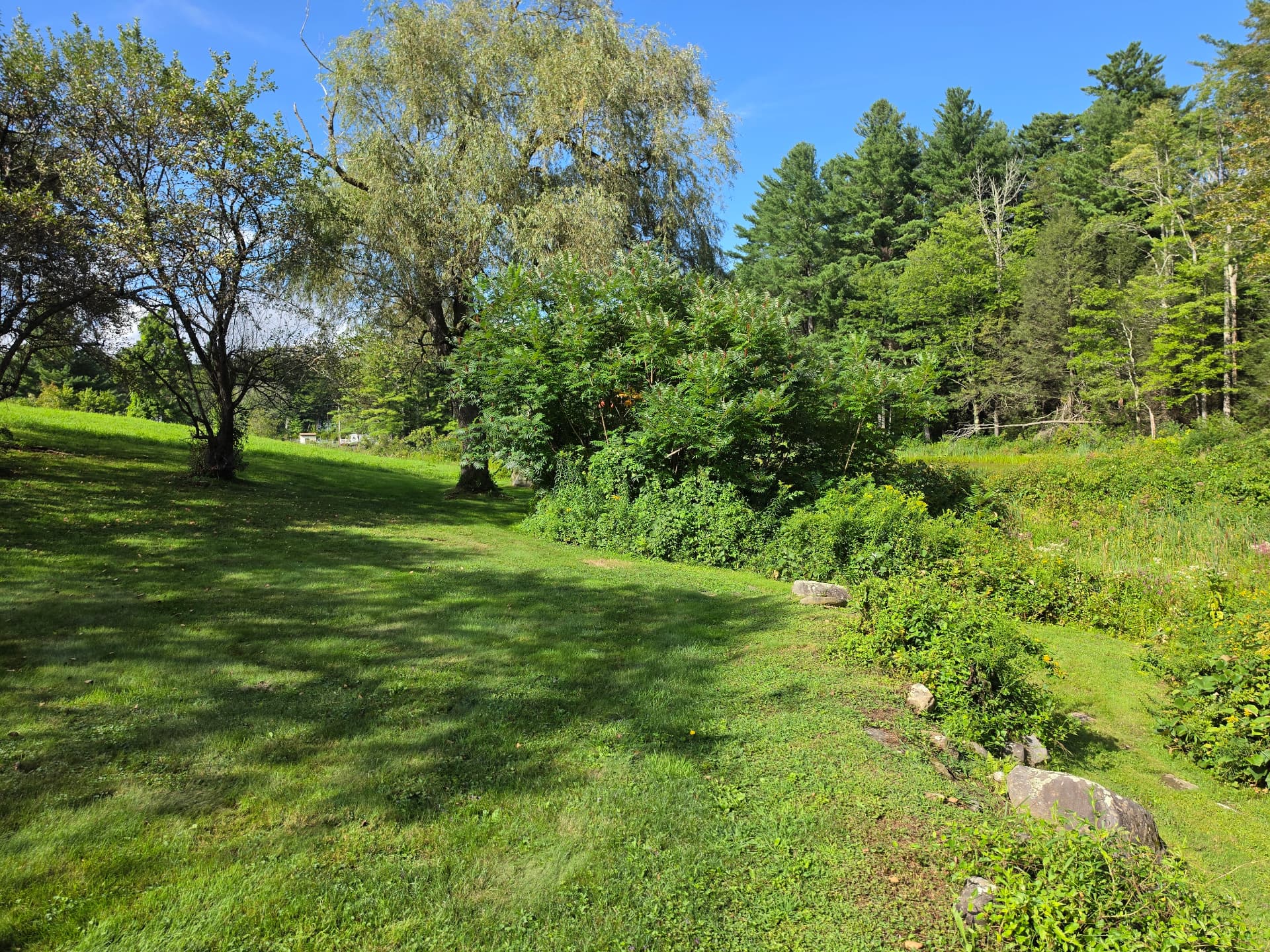 BEFORE
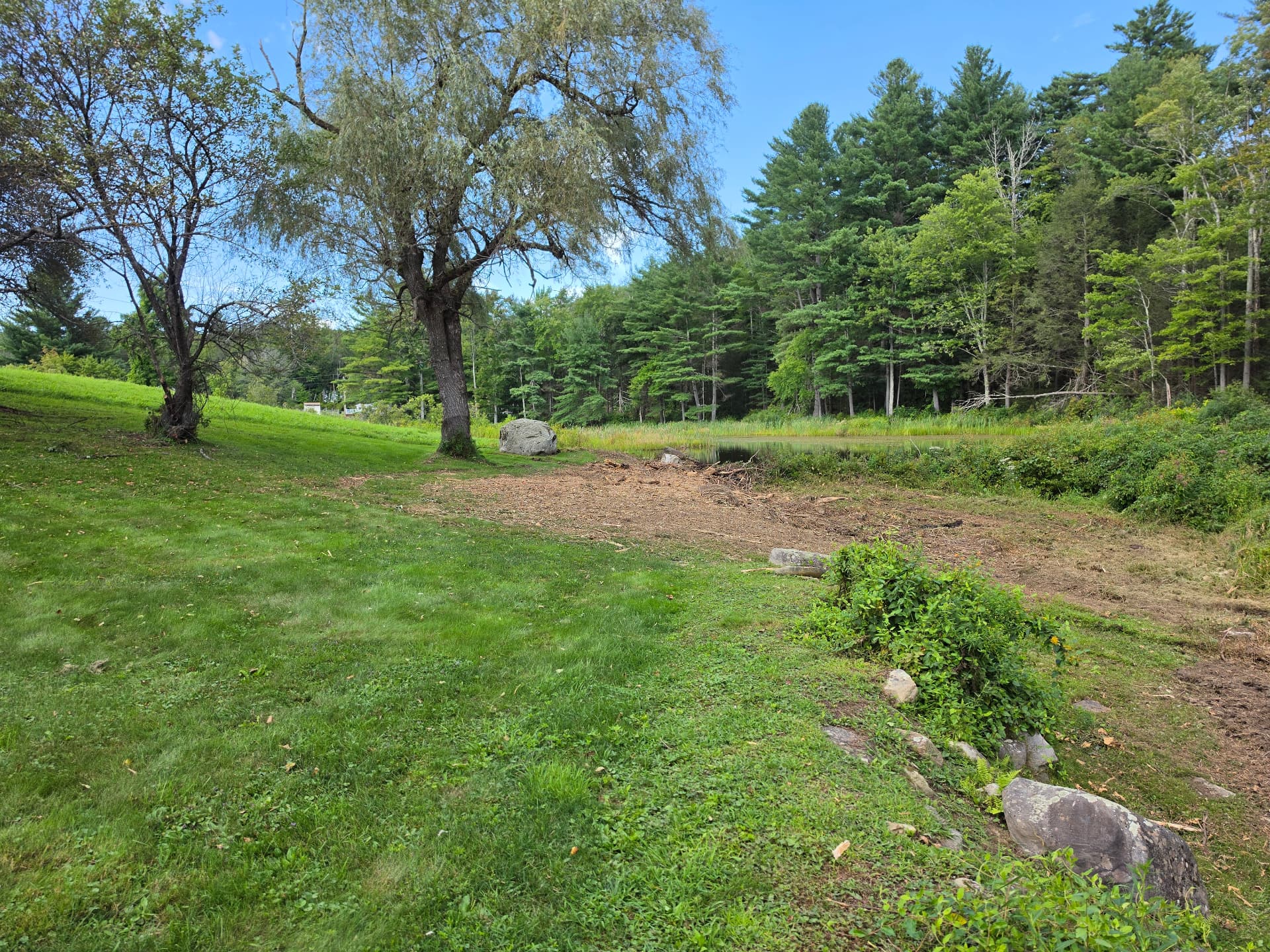 AFTER
AFTERStill Not Sure Which Fits Your Property?
Every property is different, and sometimes the honest answer is "a bit of both," land clearing for the specific footprint of a new structure, and forestry mulching for everything around it. A site visit is the fastest way to find out what actually makes sense for your land.