
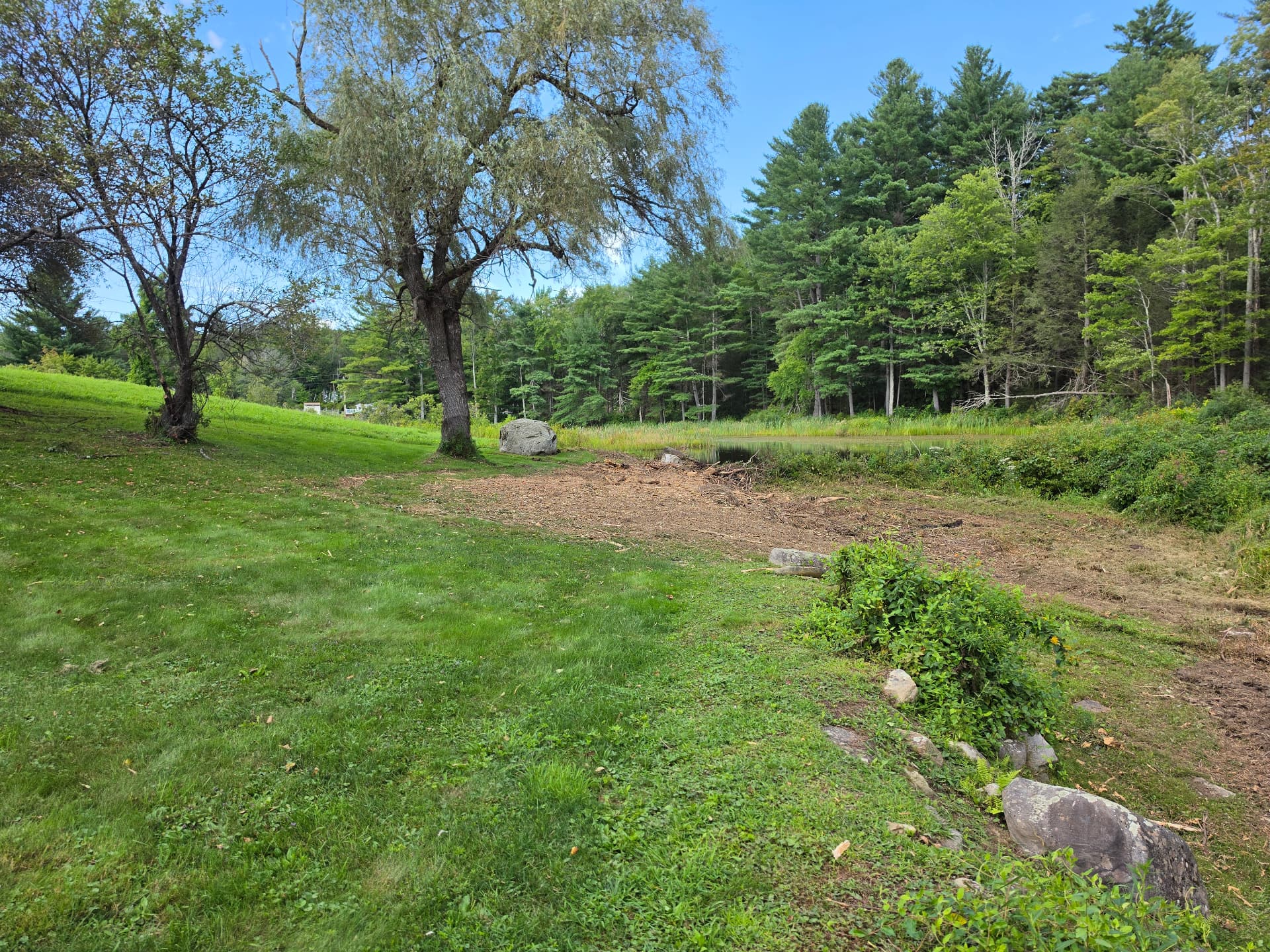
Landscape Reclamation Area
Selectively cleared and mulched overgrown vegetation between the maintained lawn and surrounding wooded areas, reopening views and improving access while preserving mature trees and natural features.
Selective forestry mulching cleared years of overgrowth on a residential property in Huntington, Massachusetts, reopening pond views and access without stripping the land bare.
This Huntington property already had the ingredients of a remarkable landscape: mature trees, willows, hydrangeas, large natural boulders, an orchard, and multiple ponds tucked into the property. Years of brush, vines, saplings, and invasive growth had gradually overtaken portions of it, making it a strong candidate for selective forestry mulching and residential land reclamation.
The owner didn't want the property cleared. She wanted it back. That distinction shaped every decision on this job, from the equipment we chose to the trees we left standing.
Years of unmanaged brush, saplings, invasive woody plants, and dense understory had crept in around the house, the driveway, the lawn edges, and selected overgrown areas. None of it happened overnight. It built up season after season until sightlines closed, access routes narrowed, and areas of the landscape that should have been open and visible were instead lost behind the brush.
The owner's goals were specific:
That last point mattered as much as the first three. This wasn't a blank-slate lot. It was a mature, lived-in property, and the plan had to respect that.
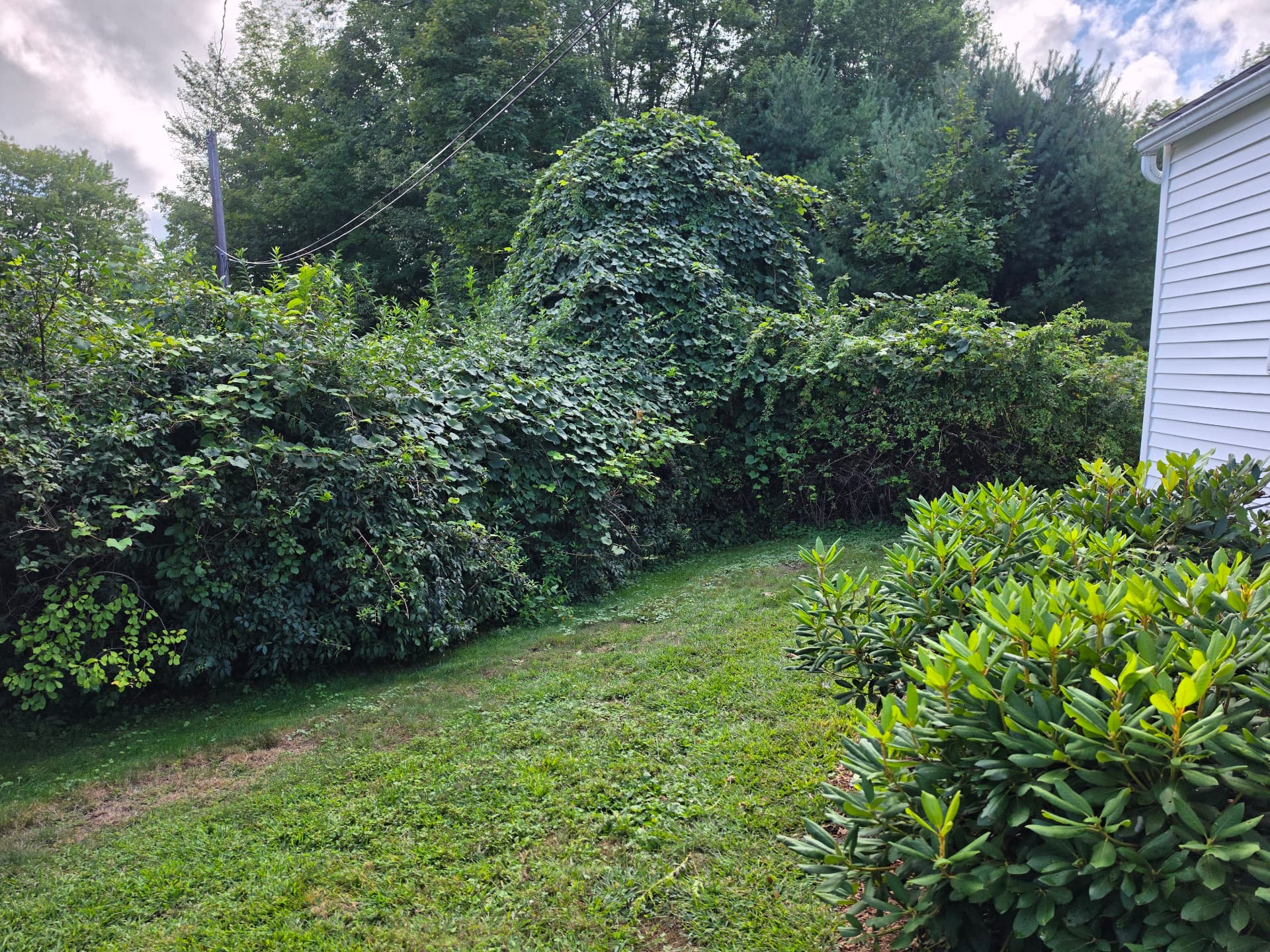
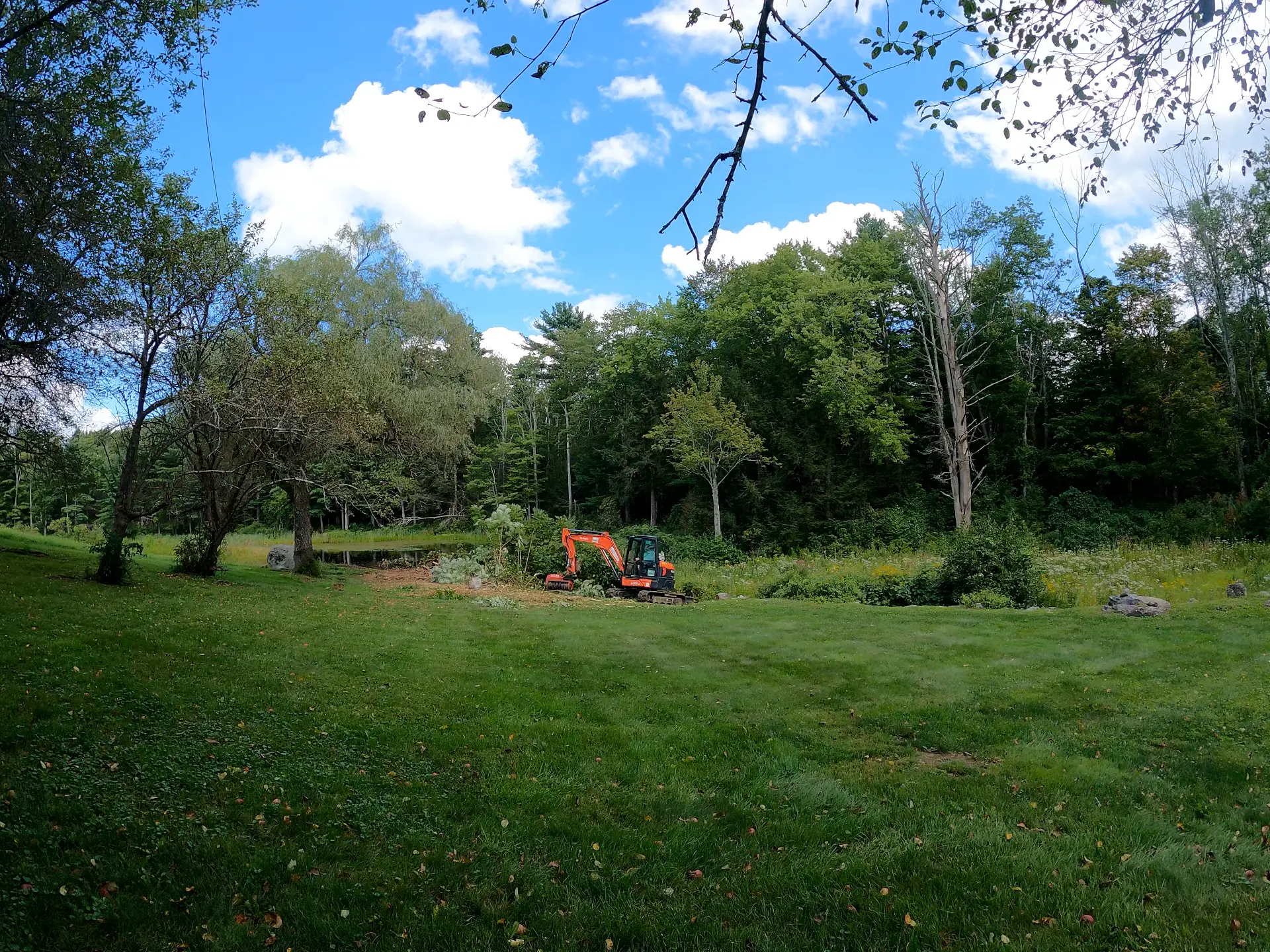
On large open clearing projects, production speed may be the priority. This property called for something different: control around every boulder, mature tree, landscape feature, and wooded transition.
We ran a Kubota U55 compact excavator fitted with a Fecon forestry mulching head, a combination chosen specifically for its ability to work tight to sensitive features. Around ponds, sloped terrain, and established landscaping, that maneuverability made the difference between opening the property up and damaging the things that made it worth opening up in the first place.
The method itself was selective forestry mulching supplemented with hand clearing in the tightest spots. Brush, saplings, vines, and invasive understory were processed directly on site, ground down and left as a natural mulch layer rather than hauled away. Mature trees and established landscape features already identified as worth keeping were worked around by hand where the machine couldn't get close enough without risk.
The result reads as intentional, not incidental. That's the point of working this way.
Selectively cleared and mulched overgrown vegetation between the maintained lawn and surrounding wooded areas, reopening views and improving access while preserving mature trees and natural features.
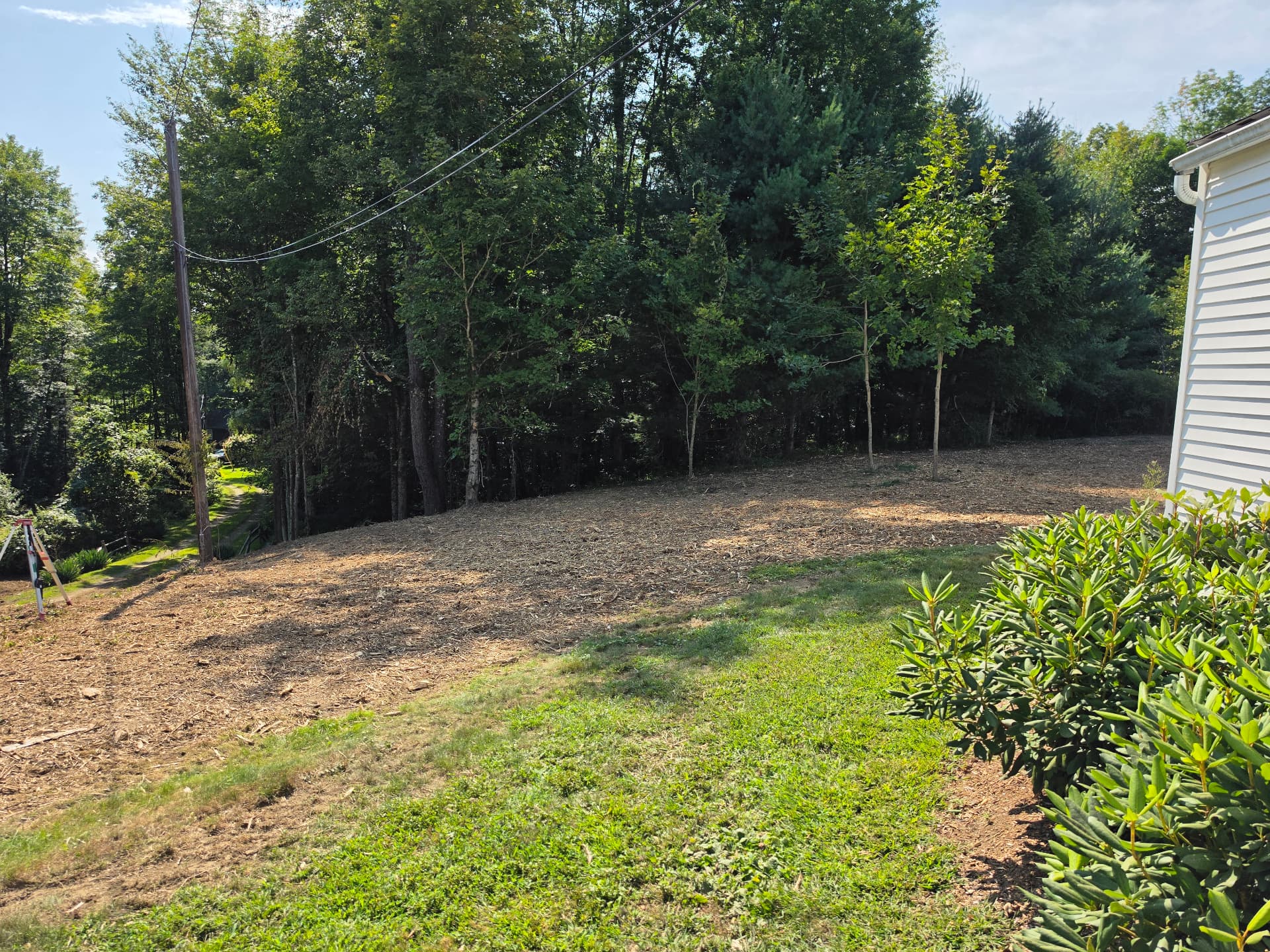
Reclaimed heavily overgrown ground near the house, tree line, and lawn transition, restoring a cleaner edge between maintained grass and woods.
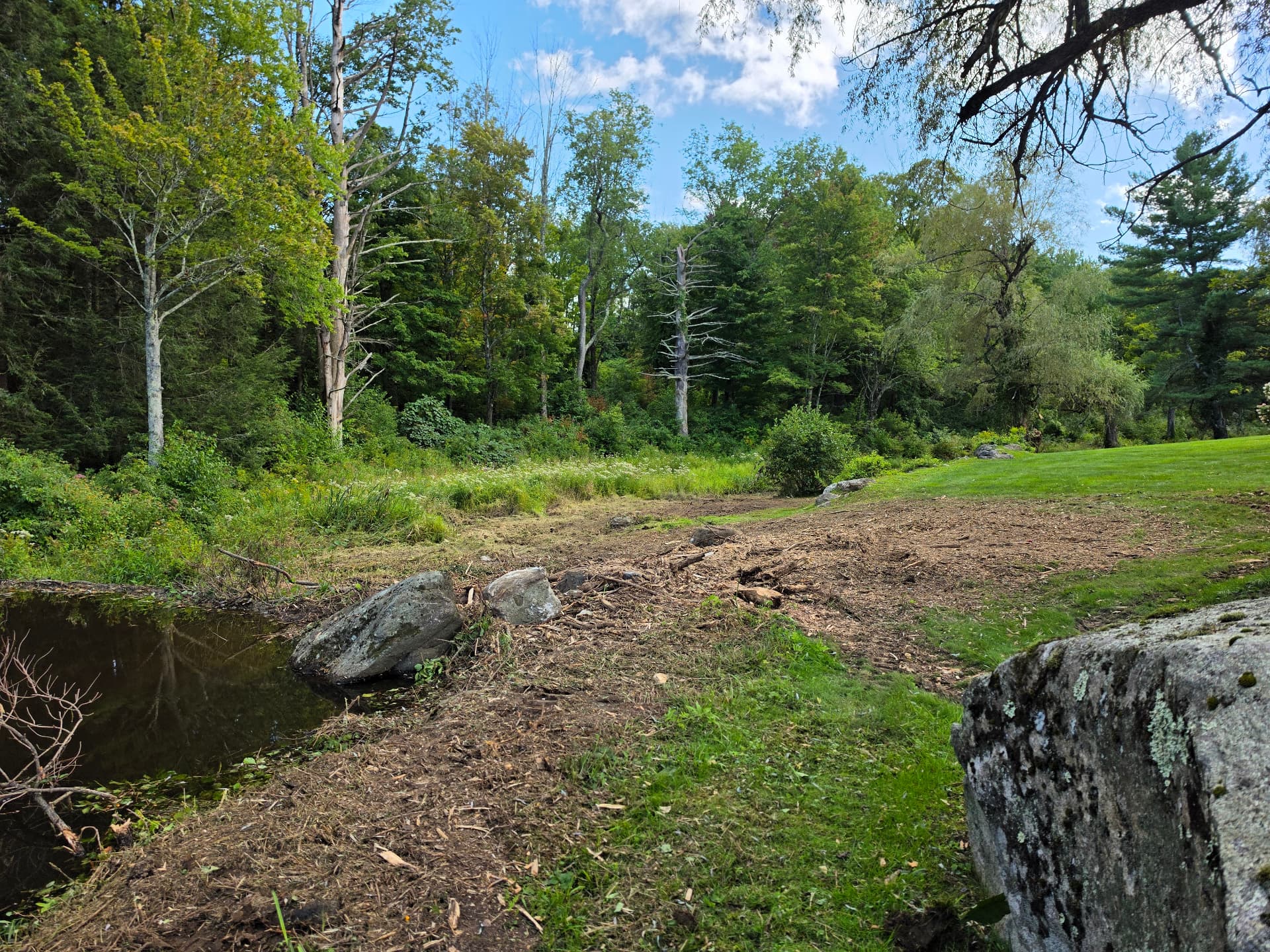
Selectively cleared dense vegetation through another overgrown section of the property while preserving mature trees, boulders, and established landscape features.
Additional cleanup included the orchard area, where overgrowth was cleared and usable apple wood was cut to firewood length rather than treated as waste.
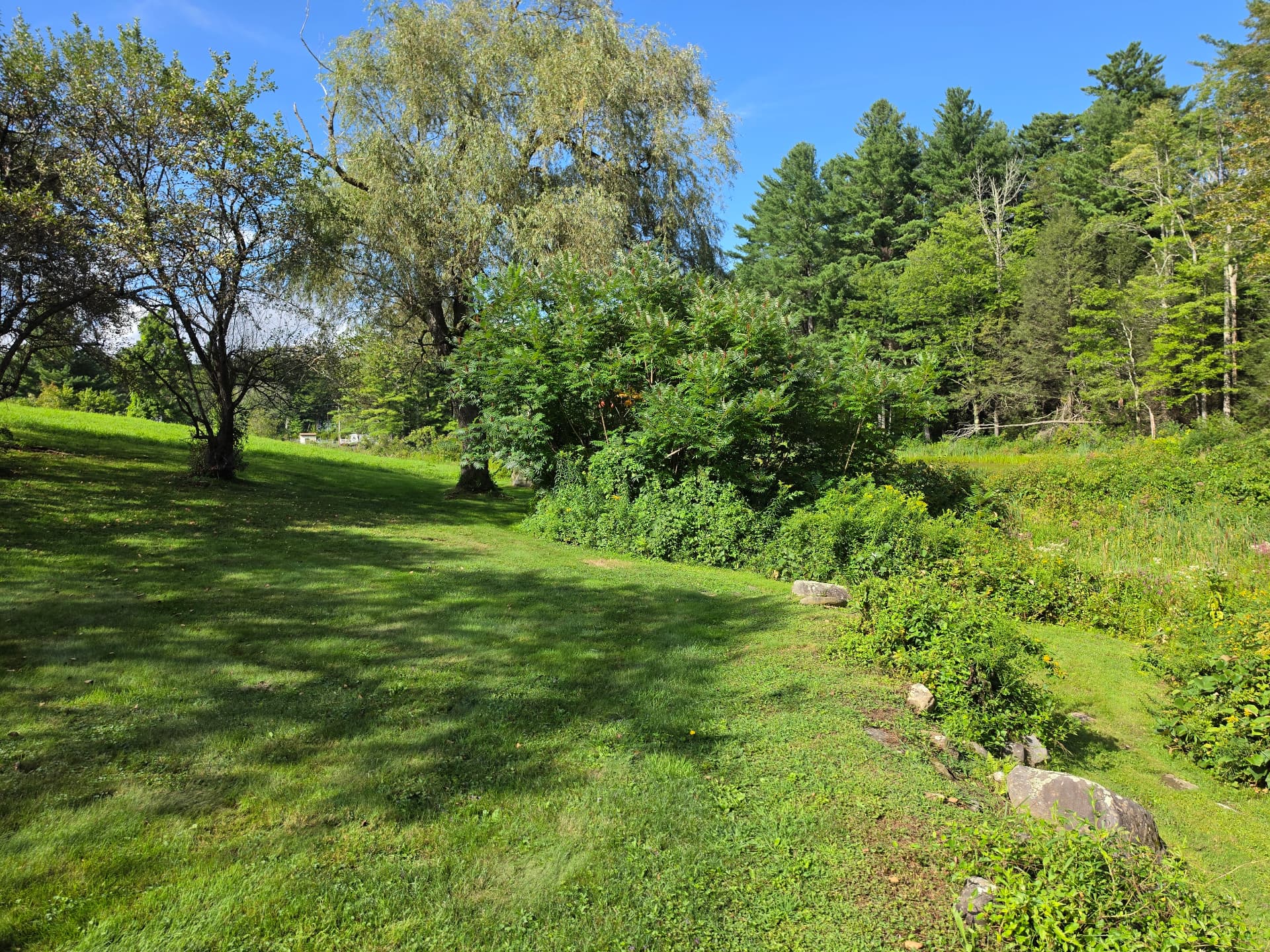 BEFOREAFTERBEFOREAFTER
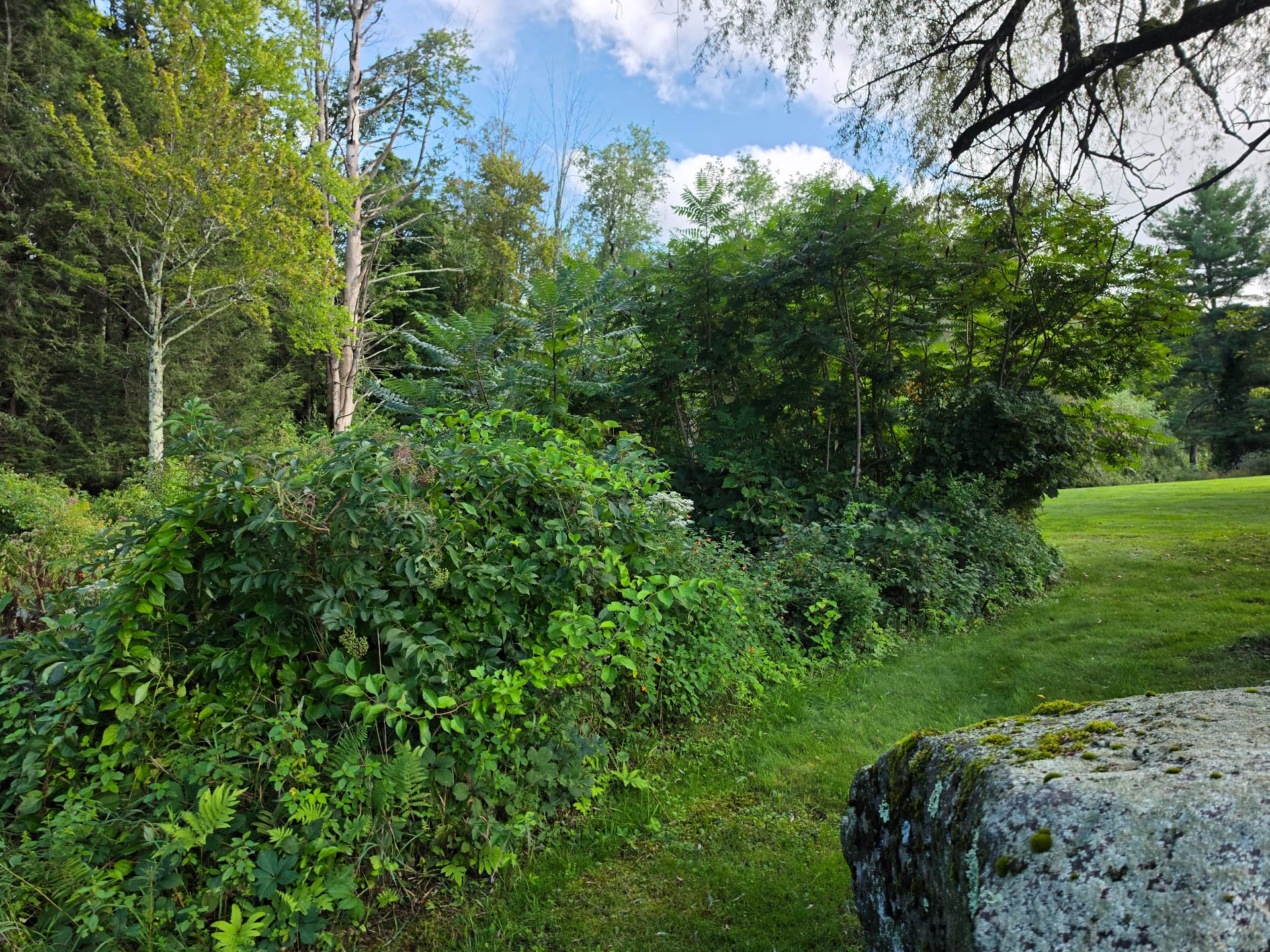 BEFOREAFTER
House, lawn edges, wooded transitions, orchard areas, and other selected sections were addressed under one coordinated project.
Mature trees, ornamental plantings, boulders, and established landscape features were intentionally preserved.
Overgrown areas were opened back up to create clearer sightlines, easier movement through the property, and cleaner transitions between maintained and wooded areas.
The property reads differently now. Sightlines open toward the pond instead of stopping at a wall of brush. The lawn meets the woods in a clean, intentional line instead of an uneven creep of overgrowth. The mature trees, willows, hydrangeas, and boulders that gave the property its character are all still exactly where they were, just visible again.
The owner saw the work as it progressed and was very pleased with the transformation. The finished areas feel more open and usable while still retaining the mature trees, established landscaping, and natural character of the property.
On larger development and open-clearing projects, conventional clearing methods often prioritize production and full vegetation removal. That approach can make sense for a construction site, but this residential property called for much more selective work.
The property still looks like itself. It just looks like itself with the overgrowth gone.
Every overgrown property is different: different terrain, different features worth keeping, different reasons it matters. A site visit is the fastest way to find out what selective clearing could look like on yours.